What is quartz?

Quartz
“Quartz is the second most abundant mineral in the earth’s continental crust, behind feldspar.” (2) “It occurs in basically all mineral environments and is the important constituent in many rocks….it is also the most varied of all minerals, occurring in all different forms, habits and colors.” (3)
Is Quartz Different From Quartzite?
Yes! Although quartz and quartzite are two popular choices for countertops, they are not the same material. Quartz contains pieces of ground quartz, combined with resin and polymers, to create a man-made material that’s pretty and strong. Quartzite is a natural metamorphic stone formed when sand is heated and compressed within the earth. (5) Too, these materials offer differences in look, durability, care and price.
▸ Appearance (4)
If you want a natural stone, quartzite is your choice. If you’d like a more diverse selection of colors and patterns to consider, you’ll find it in quartz.
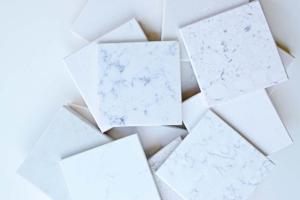
Quartz is available in a much wider range of colors because pigment can be added. The way the material is formulated gives it the appearance of a natural stone such as granite or marble.
Quartzite is generally found in white to gray. Pink and red hues are a result of iron oxide in the stone. Yellow, blue, green and orange quartzite results from the presence of other minerals. Regardless of the color, quartzite will have streaking caused by varying degrees of pressure in its formation and the random presence of iron oxide and other minerals.
▸ Durability (4)

Quartzite
Quartzite is harder than granite, so it is quite durable. It withstands heat very well. Quartz is hard too, but not quite as hard as quartzite. The resin used in manufacturing quartz is a plastic, so it is prone to melting in heat above 300 degrees.
Where quartz has an advantage over quartzite is that it is less prone to denting and chipping because it is more flexible. Both countertop materials can be scratched by sharp objects so a cutting board should be used.
▸ Maintenance (4)
Ease of maintenance is the main advantage of quartz countertops over quartzite.
Quartz requires very little maintenance. It wipes clean with a damp cloth. Abrasive cleaners should not be used and really aren’t needed.
Quartzite requires a bit more TLC. It must be sealed before use and re-sealed one or two times per year. Without a proper seal, stains can penetrate into the stone. This is a weakness shared by all natural stone, including granite.
▸ Cost (4)
Prices are similar for these two countertop types. In complex jobs, quartzite will cost more because quartz can be poured into a mold to produce virtually any shape. Quartzite must be cut with diamond blades in a process that takes time and skill.
Why is Quartz So Appealing? (1)
Quartz countertops are no-fuss. As opposed to granite, which is a natural stone, quartz countertops are man-made, engineered stone, formed from about 90% quartz with binders like resins and polymers and various pigments for color, making up the rest.
Quartz can fit practically any style. It also comes in a wide range of colors, unlike granite, which can be more limited due to the natural process from which it is made. Manufacturers are able to produce quartz countertops in everything from solid colors to imitation granite that almost no one would suspect isn’t the real thing.
Quartz makes a great investment. The cost of quartz ranges from $80 to $140 per square foot while granite starts at about $80 and can go to $175 or slightly higher. But thanks to its durability, quartz can prove cost-effective in the long-run. While upfront costs may seem higher for quartz, the lack of maintenance costs over time will far outweigh any comparisons to granite.
What About Granite?

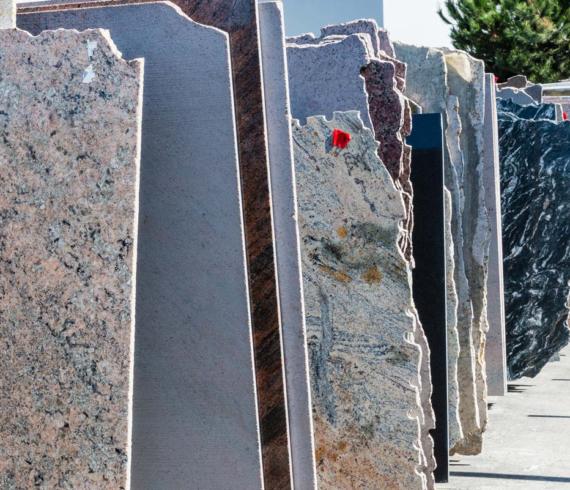
Granite
Granite isn’t dead, yet. According to Statista, one of the Internet’s leading statistics companies, “homeowners themselves reported favoring granite countertops with 41% choosing the material for their kitchen renovation projects in 2016. Quartz wasn’t far behind however, at 40%.” (1) Granite will continue its popularity, but may be surpassed by quartz (and quartzite) eventually.
One thing keeping granite alive is the trend in playing with finishes. Rather than using its typical polished form, designers are turning to an antiqued or leathered finish for granite.


.png)