Epoxy Grout
• Epoxy tile grout is among the toughest and most sustainable on the market. Unlike sanded or cementitious grout, it comprises epoxy resins and a filler powder. This makes it strong, durable, and virtually stain-proof.
• It’s waterproof and stain and shrink resistant, making it a great option for bathrooms.
• Unfortunately, it’s also quick drying, which makes it more difficult to work with and is prone to yellowing when exposed to sunlight.

There are fun grouts too. Yes, grout can be fun!
Color
• Use colorful grout in place of the typical grays, browns, and whites.
• This will spark interest in your space and make your tile stand out. Love the way this blue grout accentuates the white tile!

Glitter

• Glitter grout adds just enough shimmer, making backsplashes, tiled showers, tubs and floors permanently gleam.
Brass Inlay
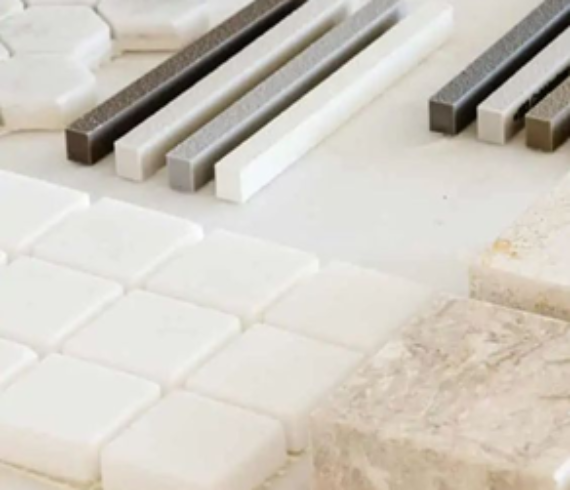
• Brass inlay as grout is a trend that started in 2014 by popular designer Emily Henderson.
• To achieve this look, utilize a 1/8” brass Schluter strip in between the tile.

Grout Patterns
The distance between tiles, where the grout fills in, is typically 3/16” or 1/8.” These grout lines can be an elemental part of the design, depending on the grout color you choose and the way you layout out your tiles. It’s a great way to show off the tile pattern, or even create a new pattern.
Chunky
• Chunky, oversized grouting has been a recurring theme in bathrooms and kitchens of late, offering a more graphic, playful look on the walls or floor.
• From rustic, artisanal terracotta flooring to asymmetrical, geometric patterns on shower walls, this grouting idea is certainly defining the modern bathrooms and kitchens of 2023.

Supersized

• The extra-large grout joint accentuates “the woven” and more graphic characteristics of this tile combination, while the warm terracotta tones make the installation more tactile and grant an extra-earthy quality to it.
• Multi-shaped tile combinations work well with the oversized grouting idea.
Secondary
• For a visually striking idea, try experimenting with different-sized grouting joints within the same design. The vertical slim lines between the rectangular tiles are more akin to the sort of tiling designs that have dominated the last few years, but the chunky, horizontal joints between each row make for a more unique, contemporary look.

Grout Selection
#1 Beware of White
• White is the color most susceptible to staining and discoloration. Even quality grout that gets regular cleaning can become stained and show soap scum.


#2 Use Contrast
• Contrasting grout is best when you want to add a playful design element to your space. If you like a bold look or prefer pattern over simplicity, then contrasting grout is for you.

#3 Coordinate Colors

• Coordinating colors of grout, but not a 100% match, will draw attention to the tile shape and pattern, but not be too overpowering. If your tile has color variations, choose one of the main colors of the tile to match your grout. This keeps the transition between tiles smooth.
#4 Match Tile
• A perfectly matched or very similar grout match works well for busy patterns of tile that would be overwhelming with a contrasting tile.


.png)