Behind the Design: Why Material Testing Matters
Talie Jane Interiors
August 31, 2026

Famous interior designers like Joanna Gaines, Nate Berkus, Kelly Wearstler, Martyn Lawrence Bullard, Bobby Berk, Peter Marino, Justina Blakeney, […]
.jpeg)
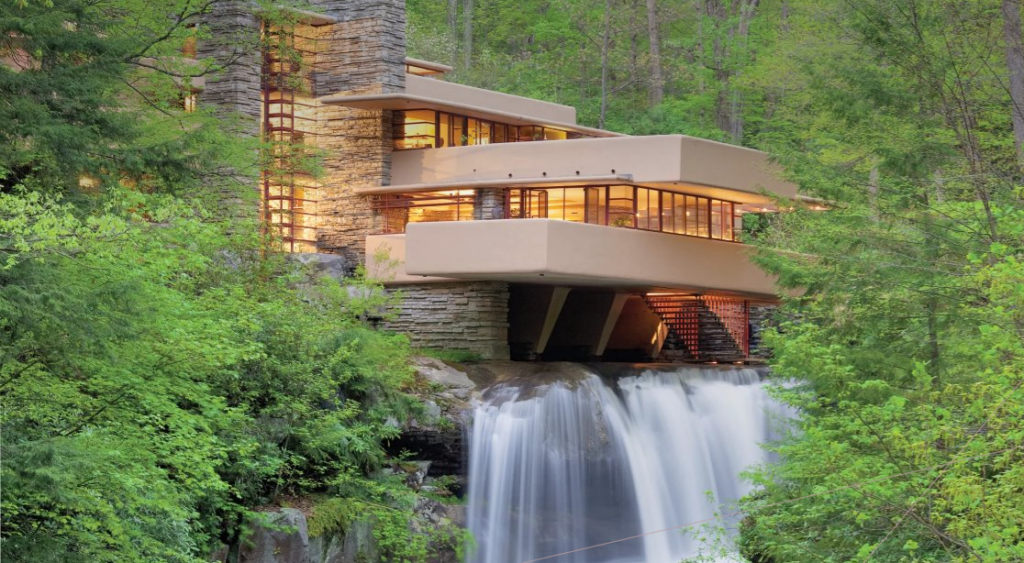
Although the term “biophilic design” wasn’t coined until later, Wright’s work embodies its principles. He believed in connecting people to nature through architecture, using natural materials and forms that reflect the environment. Additionally, Wright’s vision extended beyond buildings; he designed furniture, stained glass, and textiles, striving for a total design approach that created cohesive and harmonious spaces.
Despite his monumental influence on architecture, Wright never held a formal architectural degree. He briefly studied civil engineering at the University of Wisconsin before leaving to apprentice with the esteemed architect Louis Sullivan in Chicago, often referred to as the “father of skyscrapers.”
Remarkably, Wright remained active in his work well into his 90s, continuing to design and teach until his passing in 1959. His final masterpiece, the Guggenheim Museum, was completed at the age of 91, underscoring his lifelong dedication to innovation and design. Wright’s legacy continues to inspire architects and designers, affirming his status as a transformative figure in the world of architecture.
https://www.instagram.com/amberinteriors/?hl=en
Made for Living – Book by Amber Lewis
https://amberinteriordesign.com/projects
http://abbyhetheringtoninteriors.com/residential/
http://abbyhetheringtoninteriors.com/about
http://abbyhetheringtoninteriors.com/press
Images:
The 20 Most Famous Interior Designers Working Today | Architectural Digest